Friday, 14 February 2014

Respect for Gandhiji from the land of the rising Sun!

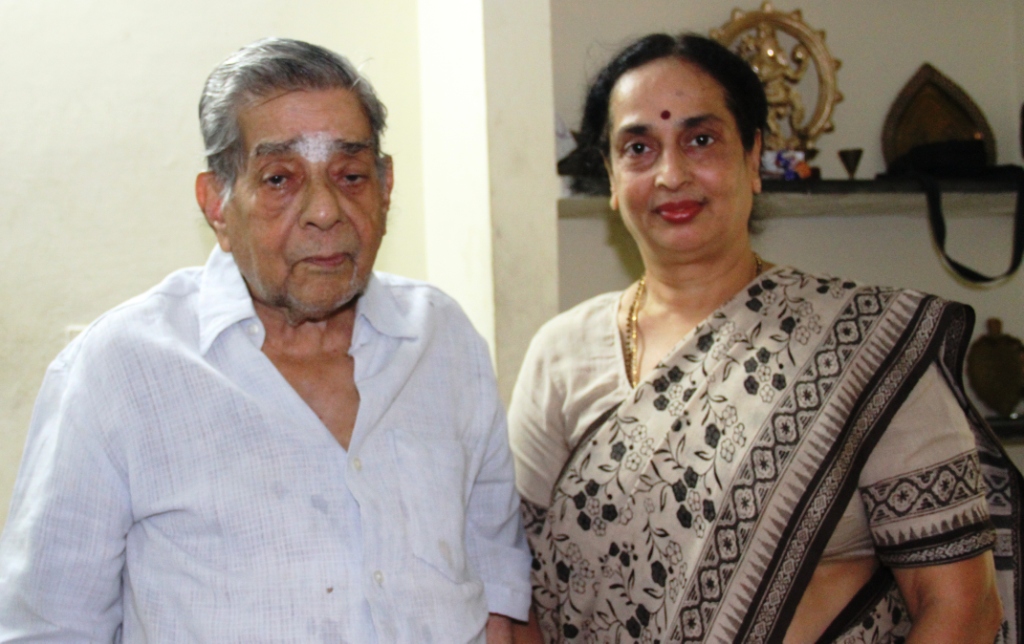
Kanokogi san in Delhi
This is my 49th visit to India since 1973, said the octogenarian Kenkichi Kanokogi,  when I met him for the first time yesterday on 13th February, 2014 at the Japan Foundation in Delhi.  He had just returned from the Anasakti Ashram, Kausani in Uttarakhand.  He informed me that he had gone to  Kausani because  Gandhiji  had found his inspiration there!  During his many visits to India, Kanokogi san has been to the Sabarmati Ashram, Porbandar, Mani Bhavan,  Aga Khan Palace and perhaps  Sewagram Ashram too. He has practically  visited most of  the places where Gandhiji had lived and worked as according to him Gandhiji   was deeply religious and sacrificed his life for the Nation.
The snow clad mountain peaks of the Himalayas are to the North of Kausani forming its horizon. No peak is less than 2000 meters high.The grandeur of the mountains, the calming & peaceful qualities of nature are simultaneously present in Kausani. Gandhiji wrote his introduction to his translation of the Gita in Kausani. 
Anasakti Ashram in Kausani 

In 1929, Mahatma Gandhi spent 12 days here to finish the Gita. He named it  Anasakti Yoga. He wanted to present to the people not only the message of the Gita but his own experience, while attempting to mould his conduct according to the Gita.  Every evening at 6 pm prayers are conducted in the main hall at Anasakti Ashram in Gandhiji's memory. One can can stay in the Ashram but one must respect the rules, including attending evening prayers.

With the jhola
 Today, once again I met this very serene Japanese gentleman who exuded calmness from every pore of his being. He has been with the ''Japan India Association'' for over 40 years and is the Vice President of the ''Discover India Club'' in Tokyo. It was an unusual sight to see a Japanese gentleman carrying a jhola on his shoulders, while  he looked very much at ease. He has bought the bag from Shantiniketan, no from Sriniketan, he informed me. ‘’I like it very much’’, said the man of few words as he carried everything required for the meeting in the Sriniketani jhola.  

Thursday, 19 September 2013

Carrying out the legacy of Amal Prabha Das at Sarania ashram

My friend Subrato Sharma studied in Rajghat Besant School in Varanasi with me. She now teaches at the Cotton College in Guwahati. Her father was a Gandhian and  later became a member of the legislative Assembly in Assam. Subrato took me to meet Sakuntala Chowdhury and  Hemo Kakati, both octogenarians, who stay at the Sarania Kasturba Gandhi ashram to look after its varied activities. Both of them were colleagues of Amal Prabha Das who was a reformer and a Gandhian. She along with her mother, Hemaprabha Das, set up the Sabarmati-style ashram in the Sarania Hills near Guwahati.
With Sakuntalaji and Hemo Kakati ji
Amal Prabha was the child of Hema Prabha and Hare Krishna Das. In 1934, when Gandhiji visited Assam for the Harijan yatra, he stayed at her parents’ house. Amal Prabha got to see his work at close quarters and this inspired her to walk the path of service. In 1927 she was denied admission to Cotton College as she was a girl; ironically this same college was later to offer her a job but she declined. She traveled to Calcutta and studied applied chemistry, becoming the first Assamese woman to get a postgraduate degree. She also studied clinical pathology there.
Having completed her studies, in 1939 along with her mother, she visited the Maganvadi Center of Self Development at Wardha in Maharashtra to learn about constructive programs for village development - to train local people in handicrafts and small-scale forest-based industries. Inspired, the mother and daughter decided to set up indigenous cottage industries on their Sarania Hills land. The ladies also started training the downtrodden masses so that they might stand on their own feet. That marked the genesis of many a creative activity atop the hills. When Kasturba Gandhi died in 1944, Gandhiji set up the Kasturba Gandhi Memorial Trust and appointed Amal Prabha to supervise its work in the Northeast.
The cottage where Gandhiji had stayed
When  Gandhiji came to Assam in 1946 he stayed in the Sarania ashram and formally inaugurated the Gram Sevika Vidyalaya.  Gandhiji  is said to have commented about  Amal Prabha, ‘Yeh ladki chatur hain, kam kar sakti hain,’ (this girl is clever, she can work).  Assam’s Amal Prabha Das, dedicated  her life to render service to the suffering humanity.
Many of the present generation do not know that it was in Assam, particularly the area under Dhakuakhana and Dhemaji, that the Bhoodaan movement took concrete shape of Gramdaan. The draft of the first Gramdaan Act was prepared by the Kasturba Trust, Guwahati and presented to the government of Assam and was promptly made into a law at the untiring efforts of Amal Prabha. At Guwahati, Mahendra Mohan Lahiri donated 100 bighas of land on which she started the work of Assam Go-Seva Samiti.
With Subrato Sharma under the tree where Gandhiji  sat to spin the charkha
I was fortunate to have spent some time with both the grand old ladies who look after the ashram to continue the work of Amal Prabha Das at the age of 92 and 89 respectively even today. The serene surroundings of the Sarania ashram, the cottage where Gandhji had stayed for three days, the tree under which Gandhiji used to spin on the charkha and the gentle Gram Sevikas in their simple Khadi mekhala and dupatta reminded me that one of the qualities of Gandhiji was  that whoever came into contact with him, did his work, all through their life, considering it their mission.   


Wednesday, 18 September 2013

Champion of the poor

The recent communal riots in Muzaffarnagar in Uttar Pradesh has brought back  memories of the Noakhali ,massacre and of Mahatma Gandhi, the soldier of peace, the champion of the poor, who walked alone among them.   The one who always shared the sorrows of others, was filled with anguish by the degradation of  the human spirit. The news about the human tragedy reached Gandhiji  who was on his way to Sevagram from Delhi.  He decided to proceed to Bengal and not to Sevagram.  It is said that on 10th October 1946, a one sided massacre commenced in the Muslim dominant areas in Noakhali district of East Bengal (now in Bangaldesh). The violence was well organized and well-executed, as if it were pre-planned. The people who were well acquainted with each other, who had spent days and nights working together in the fields, had carried out this massacre. Gandhiji had camped in Noakhali district and toured the district in a mission to restore peace and communal harmony in the winter of 1947. Gandhiji’s tireless pilgrimage for peace in Noakhali and Tipperah districts began from Chandpur and lasted four months.

Gandhiji in Noakhali ,1947
He went from village to village through the muddy paddy fields and the network of waterways to wipe tears and give solace to the victims. The Ganga flowing on the west and the Brahmaputra coming from north east converge to become river Padma.  A little further to the south river Padma is met by the river Meghna as the confluence of the great rivers form a delta. Walking tirelessly through the densely growing coconut and betel nut forest, he appealed to Hindus and Muslims, men and women that they should take the pledge not to kill each other and ensure peace.  Gandhiji realized that the common people had not forsaken their humanity to the extent that the leaders had.  Gandhiji’s message to both Hindus and Muslims was to be free from fear.
The means to people’s heart is through service. It is through service that the soldier of peace knew the pains of others and gave courage to the helpless and gradually rekindled  trust in the adversaries. This soldier of peace was a young man of seventy seven. Faith in God and prayers sustained him. He gave courage and fortitude to thousands who had lost hope.
Gandhiji was asked towards the end of his stay in Srirampur as about the  impact of his stay. He replied, nothing tangible, but then, ‘non-violence works in unseen ways.’ 
After Gandhiji had left for Bihar, a very old Muslim approached Satish Chandra Dasgupta. He was throughout with Gandhiji arranging his route. Gandhiji  had entrusted the work of restoring peace in his able hands. The old man asked Satish Chandra when Gandhi baba would be returning.  Satish Chandra told him that Gandhiji was in Bihar and has a lot of work their now. He assured the old man that as Gandhiji had said he would come back, he would .The old man said, ‘do let me know when he comes back.’  Satish Chandra was curious to know as to why he wanted Gandhi to come back. The old man said,’ Who else except him is there to worry about us, to care for us?’

Tuesday, 17 September 2013

Khadi sari from Usha didi

Recently, I met Usha H. Gokani, one of the granddaughters of Mahatma Gandhi in Mumbai. In Sevagram as a child, I was very fond of her parents Ramdas Bhai and Nirmala Ba. They used to live in the Ashram and my brother and I used to pass their house every day on our way to basic education school in the nearby Shegaon village. 
We always used to stop by their house and Nirmala Ba would always give us something to eat. We would be excited and go home eating the goodies. 
I remember Usha didi and her sister Sumitra didi who used to visit their parents often in 
With Usha didi at her home 
Sevagram. After almost 50 years, I got a chance to meet Usha didi in Mumbai on June 18, 2013. She looked like her father Ramdas Gandhi to me and lovingly fed me 'Handavo', a Gujarati specialty.  Currently she is the chairperson of the Gandhi Smarak Nidhi, Mumbai and Mani Bhavan Gandhi Sangrahalaya. She continues to carry out many activities in the memory of her grandfather Bapuji through these two organisations. 
Gandhiji used to stay in Mani Bhavan at 19, Laburnum Road in Gamdevi  in Bombay during his visits between 1917-1934.  During these 17 years, Mani Bhavan used be the focal point of Gandhi’s political activities. This mansion belonged to Revashankar Jagjeevan Jhaveri who was Gandhiji’s friend and host in Bombay during this period. It was from Mani Bhavan that Gandhiji had  initiated the non -cooperation, Satyagraha , Swadeshi, Khadi and Khilafat movements.
Inside Mani Bhavan 
Gandhiji’s association with the Charkha (spinning wheel) began in 1917, while he was staying in Mani Bhavan. It is also closely associated with Gandhiji’s involvement in the Home Rule Movement.   
Usha didi presented me with her own  Khadi sari as I touched her feet to seek her blessings for my Gandhi karya. 

Tuesday, 25 June 2013

The story of my experiments with truth

Madhu Sagar
‘I had picked up Gandhiji autobiography from one of the railway stations on my way to Ambala’ said Madhu Sagar of Bharat Petroleum Corporation Limited (BPCL) in Mumbai and could not put it down till I finished reading it. I decided to bring about three changes in my life immediately. Being truthful, walking everyday and sticking to a simple diet, Sagar recollected. According to her everyone should read the autobiography, especially about his experiments with diet and see the impact on their health also.  Gandhiji inspires people to change and that too only for Rs.40/-, as this is how much Gandhiji’s autobiography costs.  I had met Madhu during my lecture at BPCL on June 18, 2013.  
‘My life is my message’ Mahatma Gandhi had said. Over six decades after his death, his story continues to be an inspiration. His autobiography, ‘The Story of my Experiments with Truth’ generates an average annual royalty between 35-40 lakh and is a best seller that continues to inspire people. Each page one turns, there is a message for self improvement. Gandhi had willed all copy writes of his writings to Navajivan Trust and also decreed that 25% of earnings from sale and royalty of his books should be given annually to Harijan Sewak Sangh for the welfare of Harijans. 

Apart from the autobiography, Navajivan Trust publishes over 600 books and writings by the Mahatma, which add to the revenue generated to his name. Mahatma Gandhi continues to be relevant to the society and its people, not only nationally but also globally. It is time we wake up to our rights and responsibility and make a difference to the society as Gandhi did in his time. 

Mailar Mahadev’s march to Dandi with Gandhiji


Mailar Mahadev (18yrs) second from right 
A year ago I  met  V.P.Baligar, CMD  of the Housing Development Corporation (HUDCO)  who informed me about his uncle Mailar Mahadev, only one from Karnataka who participated in the Dandi march led by Gandhiji . The Salt Satyagraha started on March 12, 1930, with the undertaking of the Dandi March. It was the next significant non-violent protest against the British, after the Non-movement of 1920-22 and India's First War of Independence 1857.
Mailar Mahadev was born on June 8, 1911, into a peasant family in Motebennur, of haveri district. His father was Martandappa and his mother was Basamma, who suffered imprisonment during the freedom movement.
Mahadev renounced his home, family and native place, discontinued his studies at the school level itself. Influenced by the speech of an elderly patriot, he threw away the foreign cap he had on his head.  He had heard about Gandhiji and on his advice began carrying bundles of Khadi on his head and sold it. He went to Kaladagi, in Bijapur district which was then the centre for Khadi, then to Dharwad, then a strong centre of Freedom movement.   He became a member of the Youth League and involved himself in constrictive activities. On R.R. Diwakar’s suggestion Gandhiji included 18 year old Mahadev in the list of 79 persons for the Dandi Yatra. He was arrested at Dandi and imprisoned for six months. His parents went to Bardoli to join the satyagraha. In 1932-33, Sidamma was also arrested and imprisoned for six months at Ahmedabad.
Mahadev continued the khadi propagation and upliftment of dalits through his on ‘Grama Sevaharm’ in 1937 in Koduru. On Gandhiji’s call of ‘Do or Die’ Mahadev and his followers took up activities to force the British administrative machinery to come to a standstill. 
On a fateful day in 1943,  as he got determined to distribute the taxes to the peasants that was forcibly collected by the British government from them, he  lead a team to attack the revenue office in Veerabhadra Temple. He was fired straight on his chest by two soldiers hiding behind the idol. Writhing in pain Mahadev prevented his followers from firing at them as theirs was a peaceful struggle. 

Mahadev was 32 years old at that time, Baligar told me. More than seventy years ago Mahadev set an example of sacrificing his life for the nation. Because of such persons the we are tasting the salt of freedom today.  

Sunday, 16 June 2013

Continuing Gandhi's work

With Shri V.K. Sthanunathan
I met Shri V.K. Sthanunathan in Chennai on June 7, 2013. He is 91 years old and has been the honorary secretary of the autonomous private charitable trust ‘Thakkar Bapa Vidyalaya’.  I was introduced to him by Mr. George Simon, of BHEL, Chennai.  It has been 30 years since Shri Sthanunathan retired as a member of the Railway Board in 1980. Living in the premises of the Tamilnadu Harijan Sevak Samithi, he has devoted the rest of life after retirement working for the Vidyalalya that was established by Thakkar Bapa in 1933 under the directions of Mahatma Gandhi as a Harijan Industrial School to impart skill training.
Thakkar Bapa Vidyalalya
Amritlal V.  Thakkar or Thakkar Bapa was Gandhiji’s contemporary. He was a civil engineer from Gujarat and served the dalits and adivasis. He was an associate of Gokhale ji in the Servants of India Society and took deep interest in Gandhiji’s work. Thakkar Bappa became the secretary of the Harijan Sevak Sangh established by Gandhiji. Throughout his life he was no less committed a servant of the least than Gandhiji.  

Shri Sthanunathan reminisced about his father-in-law, A. Vaidyanatha Iyer who was born in Thanjavur in 1890 in a Tamil Brahmin family. In 1922 Iyer had participated in the non –cooperation movement, in 1930 in the Vedaranayam Salt Satyagraha and the Quit India Movement in 1942. 

On July 8, 1939, seventy five years ago he entered the Meenakshi Sundareswarar Temple in Madurai with six persons belonging to other oppressed castes. The temple entry team was led by Vaidyanatha Iyer and L.N.Gopalasamy, president and secretary of the Tamil Nadu Harijan Sevak Sangh respectively. At 8.45 a.m. a batch of five Dalits and a Nadar – P.Kakkan (who later became Home Minister in Kamaraj Ministry ), Swami Muruganandam, Muthu, V.S. Chinnah, V.R. Poovalingam and S. S. Shunmuga Nadar -- made their first entry into the Meenakshi Temple. Meenakshi Temple entry on July 8, 1939, was the forerunner of the State legislation which conferred on the suppressed section of Hindu society the right to enter temples. Following the temple entry, Chief Minister of Madras Presidency C.Rajagoplachari introduced legislation for the removal of the civil and social disabilities against the depressed classes.

The efforts of Vaidyanatha Iyer to mainstream Dalits transcended the question of patronising as his efforts were genuinely empowering. He not only worked among Dalits but also persuaded upper caste people to change the customs and treat Dalits as equals.

“I am delighted that my many-year-old desire has been fulfilled today.” This is how Mahatma Gandhi wrote in the visitors’ book shortly after offering worship at the Meenakshi-Sundareswarar temple in Madurai, Tamil Nadu, along with Dalits and members of certain other “excluded communities” on February 4, 1946.

During the Quit India movement Vaidyanatha Iyer was imprisoned from 1942-45 in Tanjore jail never hoping to come alive. In 1943 he was allowed one month’s leave to come out of the jail to celebrate his wedding and went back to jail. He was released in 1945. 

Shri Sthanunathan was married to his daughter and continues the tradition so set by his father in law. At 91, he wears no specs and has sharp memory while recounting this incident. All he wants now, is to lead a campaign for prohibition. Gandhiji had spoken ten days before his death about his wish that now that our government has come into place, prohibition must come into effect.